

Tír na dTrí is the curious and absurd story of three Irish siblings in Gaelic times: Fergal, a moody warrior with Kingly aspirations; his half-brother Fiach, a sensitive File (or sacred poet) in training; and his half-sister Fionnuala, a Wild Woman who enjoys using her arcane magic skills to troll the new Faith.

Read it online, or download the full PDF for FREE.

Displaying the newest strip at the bottom!

Well, here we go. Starting off with the arrival of a famous Irish saint that likes doves and oak trees, and will change life in the Túath forevurrr.
One of my favorite Irish history facts is that there’s a MASSIVE gap in understanding of about 200 years from the coming of literacy, during which no one knows how did the Irish manage to learn writing AND create a cohesive spelling system for their own indigenous language based on the alphabet of a foreign language that they also mastered quickly, Latin. By the mid 6th century, Irish people like St. Columbanus (who is not St. Columba) were already writing about complex, abstract matters of theology in sophisticated Latin, and nobody understands how, and I love everything about this.
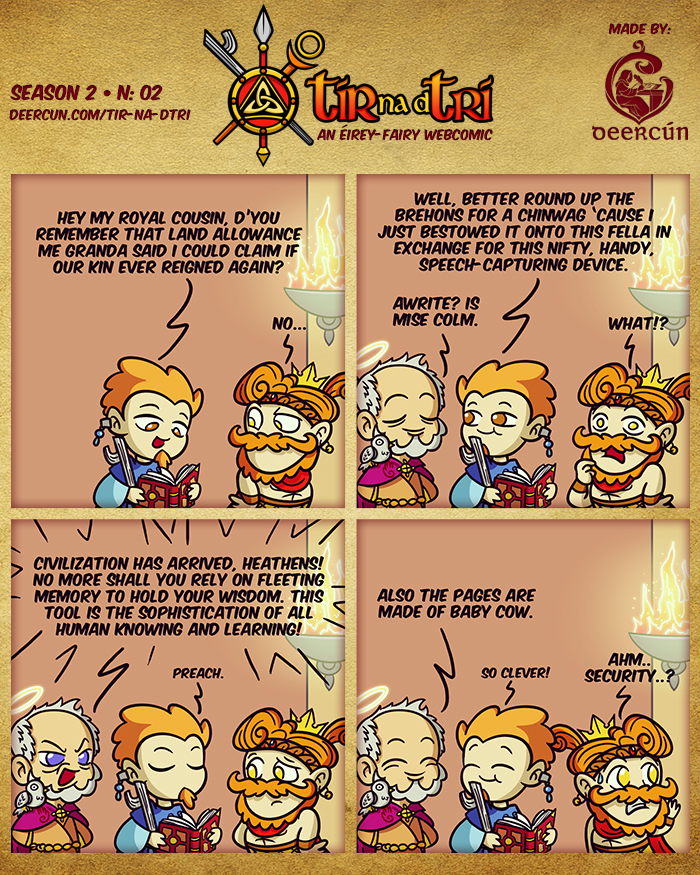
I am forever obsessed with the fact that some madman somewhere looked at a baby cow one day and thought, “D’you know what we could use its soft skin for? DOODLING!”.
According to Dáibhí Ó Crónin’s “Early Medieval Ireland”, it is estimated that for a book of 140 folios (70 individual pages), a herd of about 483 adult cattle was required to produce it. And Ireland produced A LOT of books, so I’m now I’m left wondering at the specifics of this possible, industrial, ancient Irish Paper Mill + Slaughterhouse unholy operation fusion.
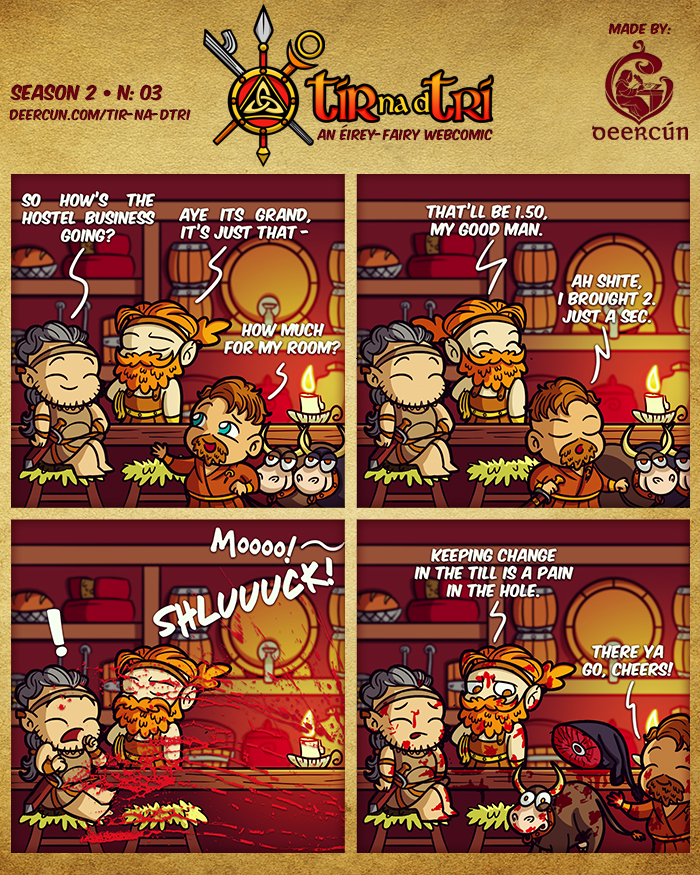
Surely Gaelic Ireland could’ve found an easier form of currency!
Of course this is not how it was. In reality, the role of Hosteller or Brigiu was an extremely high-status role within the tribe, with a similar honour-price to the King. However, this meant being wealthy enough to offer free food and lodging, so it wasn’t all fame and glamour :P.
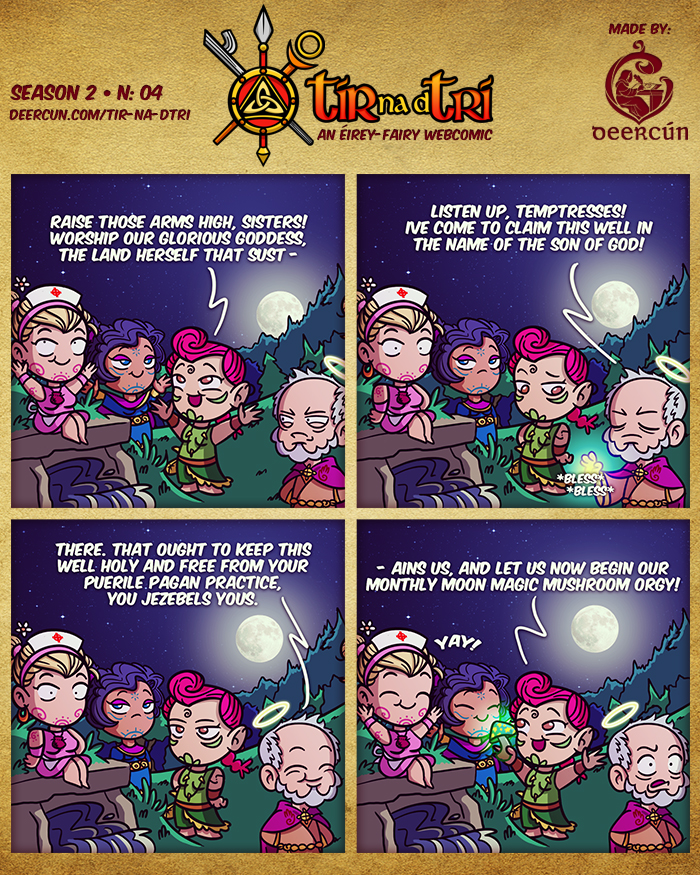
All I be sayin’ is that it must’ve been hard for the Son of God to occupy the places that had always belonged to the Daughters of the Goddess 💙

I’ll sell this BRILLIANT Halloween Marketing idea to the highest bidder of all Irish Sauna businesses.

I’m gonna spend a large part of this season highlighting all the merry ways in which Early Celtic Christianity stayed pagan and Gaelic AF.
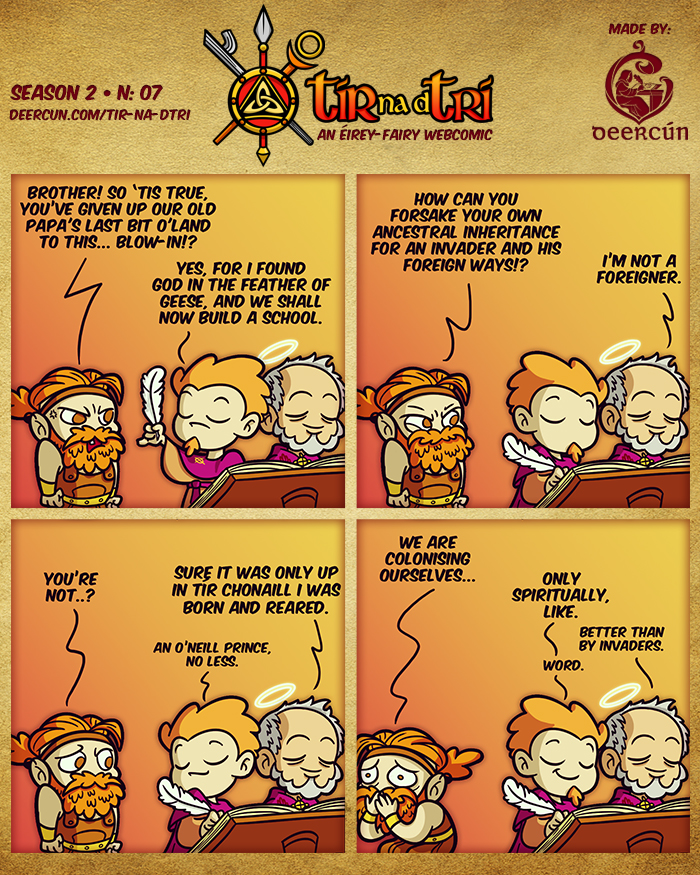
I sometimes get the feeling that Irish people don’t give consideration enough that:
1. Early Irish Christianity developed differently and independently from Rome well until the 1200’s
2. It was the Irish people themselves, without authoritarian coercion, external invasion or internal martyrdom, who willingly and eagerly took up the new religion.
3. We’ve a serious gap in records and understanding of what exactly happened during the first 200 years of Christianity in Ireland. We know it arrived around the 400’s AD, but by the 600’s we’ve got Irish Christians writing in refined Latin about abstract theology, and NO ONE UNDERSTANDS HOW.
The 2nd point is very interesting to me, for sometimes I hear people speak about how Christianity came in and somehow ‘destroyed’ Paganism, when in reality it was the Irish people themselves; and not some outside invader, who spearheaded this change from polytheism to monotheism. Because of an unawareness of the 1st point, they also often miss the fact that up until Norman times, Irish Christianity remained intrinsically linked to the indigenous Irish way of knowing. And because of the 3rd, we should all be more appreciative of how deeply Irish Christianity changed Ireland for the better, and the world at large as well.

In his excellent and recently released documentary “The Land of Slaves and Scholars”, Blind Boy brings an awareness of the most surprising and unsung realities about Early Christian Ireland. As an independent researcher, it is glorious to see this level of scrutiny on national television about a subject that, as he rightly points out, has so much to offer towards a modern sense of Irish identity; but which gets so often eclipsed by the legacy of horror left behind by the 20th century Irish Catholic Church.
Native Irish Monasticism launched Gaelic Ireland into a reciprocal, functioning and mutually enriching relationship with the rest of Europe. But it is still extremely unclear for laypeople and scholars how did this new faith take on so rapidly. As the documentary points out, people tend to forget that alongside Christianity, came the technology and infrastructure for the until then not-widely known art of Writing. It is not hard to see how the written word has a solidity that oral traditions, by nature, lack. And for the Kings and Chieftains that could afford chroniclers and annalists, sure well why wouldn’t they make sure these records paint them in the best possible light?
Manipulation of the mainstream media but those who can afford it is nothing new, kids!

The fact that someone in the Middle Ages had the CHEEK to get onto the manuscript of what would eventually become known as The Book of Kells and draw a little man with his willy out, will forever be one of my favorite, most wonderfully revealing thing about Early Irish Christianity.
For such a work of talent and sanctity, the Book of Kells features more than just a few eyebrow-raising details, unfinished sections and even some illustrations that were clearly added at a later time by less talented hands than the ones from the four scribes which produced the book. The associations with St. Columcille are not through authorship, though, as he actually died hundreds of years before the work was began. It was though probably started in the monastery of Iona, and either brought to Kells for safekeeping or to be finished during the first Viking raids (both Iona and Kells had been founded by Columcille).
Specially after the way it is been marketed as the ultimate, most amazing artistic production of Middle Ages Irish Spirituality, I will forever celebrate the fact that even back then something as sacred as the illuminated Four Gospels could be tainted by something as silly as a willy picture, and it paints a human and funny picture of a time we can only really wonder about.

A “tonsure” is the custom of partially shaving off an area of hair as a sign of spiritual devotion, and it was BIG during the Middle Ages. Different countries and religious orders had their own tonsure styles, so it was also a way to show your allegiance to your specific monastery or doctrine. The specific tonsure style of the early Irish monks is still a matter of debate: in modern times it is widely presumed to have been shaved at the front of a line going ear to ear through the middle of the head; but this was posited by a Benedictine scholar in 1703 and, according to more modern research, it goes against evidence from the 6th, 7th and 8th centuries.
In a paper from 2003, Daniel P. McCarty proposed that the Irish tonsure was triangular in shape, based on evidence from tonsures portrayed in Gospel texts and others from monasteries founded by St. Columbanus (who is a different person than St. Columcille!).
One can kiiinda see how a funny hairstyle would be a way to show humility under God’s grace but one also wonders if there weren’t other more practical ways to go about it.
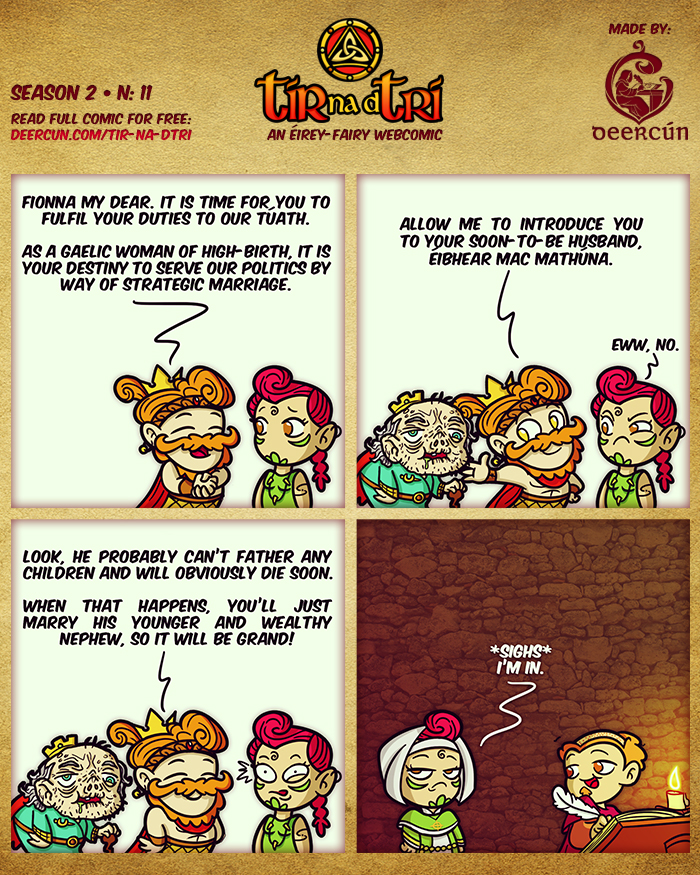
Though it is widely known that Gaelic noble women had a surprising amount of rights that other societies didn’t give women until hundreds of years later, it is also true that these rights and liberties depended vastly on who was her closest male kin. Be it father, brother, husband or King, her worth and freedoms were still tied in most cases to a man, even in the cases where she practiced a profession or owned her own land. For this and other reasons, it was indeed the fate of many Gaelic women to be used for political strategy, in many cases being passed around different husbands whichever way the political winds were blowing. A good example (although from a much later time) was Gormlaith (960–1030), a daughter of the King of Leinster. She was married to the Viking King of Dublin and gave him a son who became King of Dublin in his place. After his defeat by the emerging Irish King Brian Boru, she was given in marriage to Brian, and it is possible that before that she was also married to the then High King of Ireland, Máel Sechnaill (though the sources are less clear on this one). Regardless, the point is that this was not an uncommon cultural practice.
Luckily for them though, Christianity arrived and gave noble women one easy way out of unappealing marriage arrangements: they could marry God instead and dedicate their lives to him! St. Patrick himself mentions in his “Confessio” that noble women who had decided to follow him were given much grief by their families, and rightly so from their P.O.V., as women were indeed a key and instrumental device for political alliances.
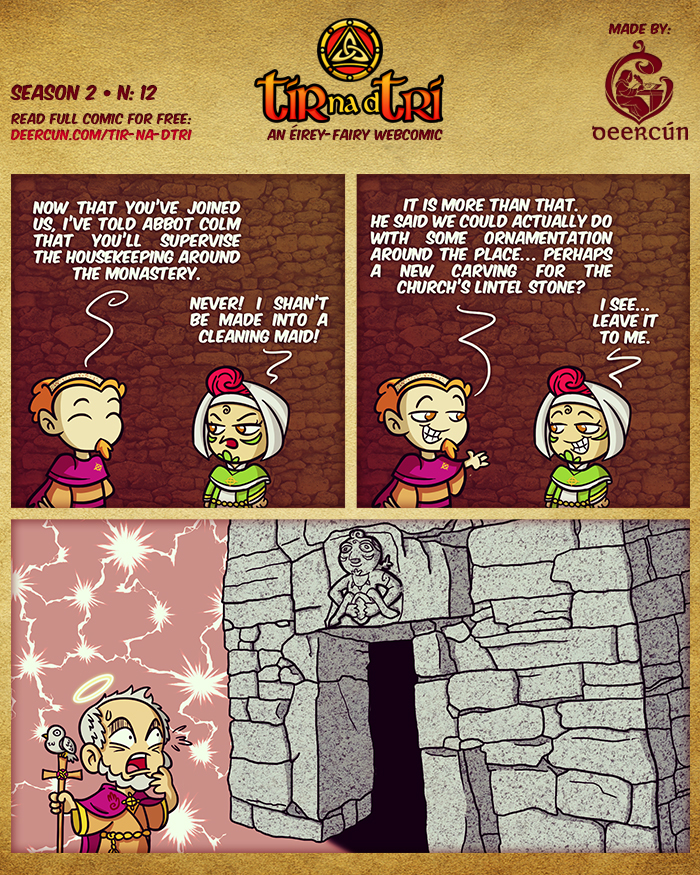
I will never not-love the fact that Sheela-na-Gigs will always be there to remind us that we know and understand waaay less about Early Irish Christianity than many authors and scholars like to believe.
I haven’t seen them there myself but it is my understanding that the National Museum of Ireland has loads of Sheelas tucked away in their basement, patiently waiting the glorious day in which their open vulvas will once again see the light of day and bless us with their confusingly wonderful existence. We should start a petition for a Sheela-na-Gig exhibition for next Brigid’s Day!
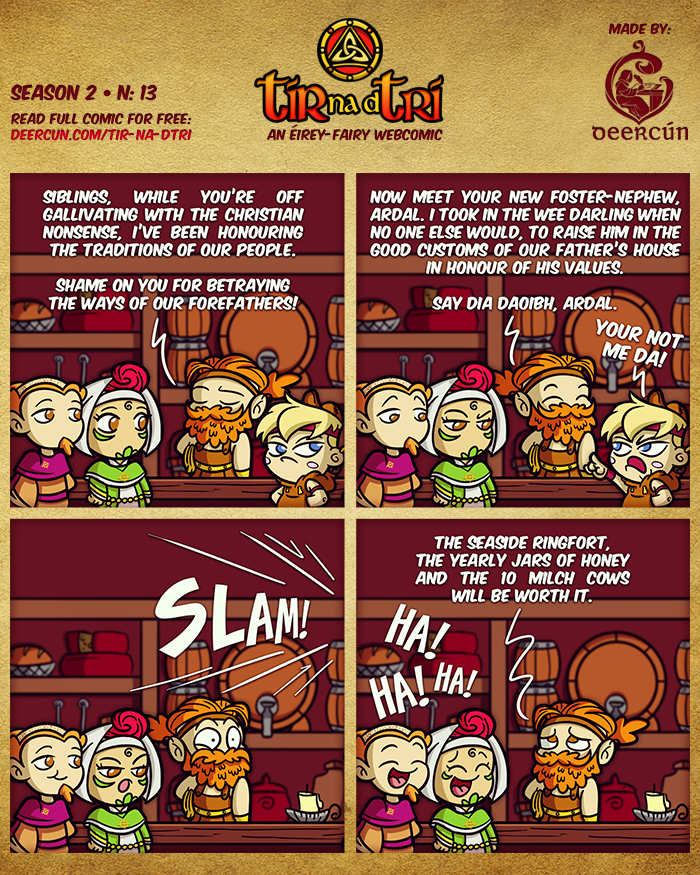
Fosterage in Gaelic Ireland, alongside less savoury customs as slavery and micromanaging hierarchy, was a pillar for the functioning of society. Traditionally, noble children would be fostered to other noble families between the ages of 7 to 14, though fosterage wasn’t exclusive to the higher classes. This practice wove a series of kinship threads that ensured strong ties amongst different families within the same Túath, reducing inner tribal conflicts and strengthening loyalty bonds.
A family would pay another to raise their kid for 7 years until adulthood, and the foster family had certain duties and rights. They were obliged by law to provide the kid with an education, lodging and training pertinent to their gender and social status. Mar shampla, High-born foster children would get honey with their oatmeal, while non high-born ones would not. If the child was unruly or misbehaved, the foster family had the right to return them and keep a part of the original fee for their bother. This practice went on waaay beyond the pre-historic Iron Age Gaels well into the 1600’s, but it ended with the final collapse of Gaelic rule in Ireland.
As wholesome and unifying as it possibly was in many cases, the underside of the practice of Fostering also provided stronger lords a ready-to-take-hostage already living in their own household and under their ‘protection’… just in case, you know, the lesser neighbor family got any notions of defying his betters while risking the (probably gruesome) death of their young.
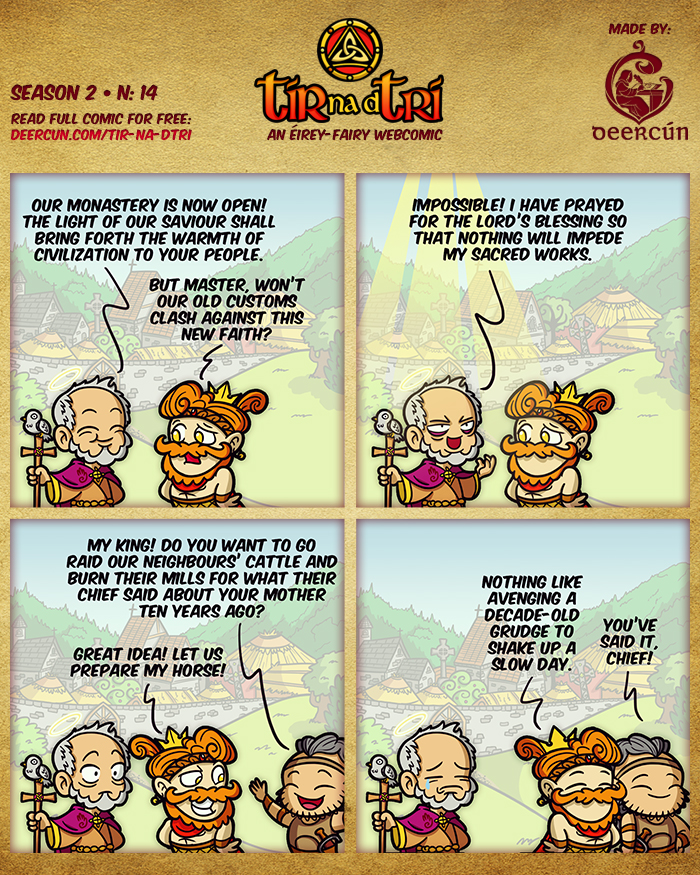
It will always blow my mind that a place as violent and hierarchical as Iron Age Ireland so willingly took up Early Christianity; and that somehow, terribly un-Christian customs like cattle raiding kept going on (and probably encouraged) for hundreds of years.
On the other hand, it is not as if violence was particularly shunned by Christianity either. In many cases, as monasteries developed, grew and accumulated wealth, they had to hire or establish their own little armies to protect themselves even against other rival monasteries (Durrow and Clonmacnoise had a bloody conflict that left around 200 people dead in 764).
 deercún